Lohri and Maghi: The Soul of Punjabi Winter - A Deep Dive into Punjab’s Fire, Faith, Folk Traditions and the Spiritual Transition from Celebration to Reflection
Punjab is not just a place on the map; it is an emotion, a living culture and a timeless story passed from one generation to the next. Here, festivals are not merely dates on a calendar but vibrant experiences that bring families, faith and farming together. Among the many colorful celebrations of Punjab, Lohri and Maghi stand out as the true soul of the Punjabi winter, connecting the rhythm of the seasons with the rhythm of people’s hearts.
Celebrated on 13th and 14th January respectively, Lohri and Maghi are like two consecutive chapters of the same beautiful story. Lohri is filled with warmth, music and joy, while Maghi brings reflection, spirituality and remembrance. Together, they portray the complete picture of Punjabi life, where celebration and devotion walk side by side and where every ritual has both a cultural and an emotional meaning.
-(1).png)
Lohri: Fire, Harvest and New Beginnings
Lohri is celebrated every year on 13th January, right when winter is at its peak but slowly beginning to loosen its grip. The festival marks the end of the coldest days and symbolically welcomes the return of longer and brighter days after the winter solstice. This natural shift has been observed for generations Lohri transforms that astronomical change into a heartfelt community celebration.
For Punjab, a land deeply rooted in agriculture, Lohri carries special importance for farmers. It is closely associated with the Rabi crop cycle, especially wheat, which is sown in winter and harvested in spring. The green fields waving in the cold wind are a sign of hope Lohri becomes a way of saying “thank you” to nature for nurturing the crop and filling life with the promise of abundance.
Lohri stands for:
- The return of longer days and sunlight
- Gratitude for a good harvest
- Celebration of new beginnings, especially for newlyweds and newborns
In many families, the first Lohri of a newly married couple or a newborn baby is celebrated with extra enthusiasm. Relatives and friends gather, exchange gifts, bless the couple or the child and turn the festival into a memory that often becomes a reference point in family stories. People decorate their homes, wear new clothes and invite guests, not just to follow tradition but to genuinely share happiness and blessings.
The Sacred Bonfire: Warmth Beyond Flames
The heart of Lohri celebrations is the evening bonfire. As the sun sets and the winter chill deepens, people step out into courtyards, streets or open spaces to light the sacred fire. This bonfire is much more than a source of physical warmth; it is a symbol of togetherness, positivity and light driving away darkness, both outside and within.
Families, friends and neighbors gather in a circle around the fire, singing traditional Punjabi folk songs, clapping and dancing to the beats of the dhol. Children often go from house to house in the locality, singing Lohri songs and are rewarded with sweets, nuts and small treats. This simple activity teaches them sharing, confidence and a sense of belonging to a community that knows and cares for them.
Offerings such as:
- Rewari
- Gajak
- Peanuts
- Popcorn
- Sesame seeds (til)
are thrown into the fire as a symbolic act of thanksgiving to nature and the Sun God. Each handful put into the flames carries a silent prayer for prosperity, health and harmony. The act represents a simple but powerful thought: what nature gives us, we must honors, respect and share, instead of taking it for granted.
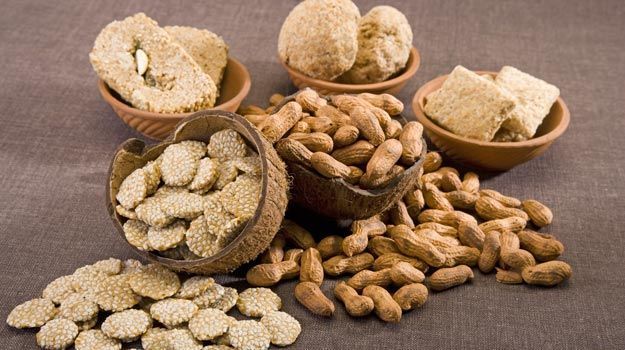
The atmosphere around the bonfire is almost cinematic. Women in colorful suits and phulkari dupattas, men in kurtas and jackets, children running around with excitement, elders blessing everyone all of this comes together with the background sound of laughter, songs and dhol. For one night, everyday worries take a backseat and warmth, in every sense of the word, takes over. In urban apartments, even if there is a small controlled fire or a symbolic gathering with candles, the intention remains the same to feel connected, festive and grateful.
Folk Legends and the Heroic Dulla Bhatti
Lohri celebrations are incomplete without the mention of Dulla Bhatti, a legendary Punjabi hero whose story is deeply woven into Lohri folk songs. He is remembered as a brave man who stood up against injustice during the Mughal era and became a protector of the weak. His name appears again and again in traditional Lohri songs sung by children and elders alike.
According to popular folklore:
- Dulla Bhatti rescued young girls who were being sold or exploited
- He arranged their marriages and provided them protection and dignity
- He became a symbol of courage, justice and compassion
Many Lohri songs begin with lines praising Dulla Bhatti and his deeds, especially his act of getting girls married as if he were their own father. Through these songs, parents pass on values like bravery, self-respect and standing up for the weak to their children. In this way, Lohri is not just about celebration; it also keeps alive the moral and cultural heritage of Punjab, reminding people that festivals are also about character, not just enjoyment.
Changing Ways of Celebrating Lohri
With time, the way Lohri is celebrated has evolved, especially in cities and among the Punjabi diaspora around the world. In villages, the celebration is often more traditional, with large bonfires in open fields and communities singing late into the night. In cities, space constraints and safety rules may mean smaller bonfires or even symbolic electric lights, but the emotional essence remains intact.
In schools, offices and housing societies, Lohri is also celebrated as a cultural day, where people of different backgrounds participate. Children perform skits about Dulla Bhatti, groups present bhangra and gidda teachers explain the meaning of Lohri to students who may not come from Punjabi families. This inclusiveness adds a new dimension to the festival, turning it into a bridge between communities and cultures.
Abroad, Punjabis living in countries like Canada, the UK, the US or Australia often book community halls or open parks to celebrate Lohri together. Even in freezing temperatures and busy work schedules, they make time for this festival, seeing it as a way to keep their roots alive and introduce their children to the warmth of Punjabi culture.
Maghi: Spiritual Depth and Sacred Sacrifice
While Lohri fills the air with festivity, the very next day brings Maghi a day of spirituality, remembrance and inner reflection. Maghi is celebrated on 14th January and is considered an auspicious day in both Hindu and Sikh traditions. The shift from the lively night of Lohri to the calm, devotional morning of Maghi feels like a natural movement from outer celebration to inner silence.
In the Hindu calendar, Maghi marks the day when the Sun enters Makara Rashi (Capricorn), a transition known as Makara Sankranti in many parts of India. This time is believed to be highly sacred. People take holy dips in rivers and lakes, offer prayers and perform charity, believing that it brings purity, blessings and spiritual merit. The idea is that as the sun begins its “northward” journey, human beings should also rise upwards in thought, action and intention.
In Sikh tradition, however, Maghi carries even deeper historical and emotional significance. It is not only about cosmic movement but about human courage, loyalty and sacrifice that changed the course of Sikh history.
Maghi and the Chali Mukte: Forty Liberated Ones
For Sikhs, Maghi is the day to remember and honor the sacrifice of the Chali Mukte the Forty Liberated Ones. These were forty brave Sikhs who, during a difficult time, had initially given up their allegiance to Guru Gobind Singh Ji by signing a document of disassociation. Later, filled with regret and a renewed sense of devotion, they returned to stand by their Guru and fight for him with all their heart and soul.
They laid down their lives in the battle of Muktsar Sahib, fighting against oppression and injustice. Their courage, loyalty and ultimate sacrifice moved Guru Gobind Singh Ji so deeply that he blessed them as “Mukte” the Liberated Ones. Their story is not just about war, but about the power of repentance, forgiveness and returning to the right path even after making mistakes.
On Maghi, especially at Sri Muktsar Sahib in Punjab:
- Devotees take a holy dip in the sacred sarovar
- They visit gurdwaras, listen to kirtan and katha
- They remember the Chali Mukte and all Sikh martyrs with gratitude
For many people, Maghi becomes a personal day of reflection where they think about their own choices, their relationship with faith and their responsibility towards truth and justice. It turns history into a mirror, asking gentle but deep questions about commitment and courage in daily life.
Maghi Mela at Muktsar Sahib
One of the grandest celebrations of Maghi takes place at Sri Muktsar Sahib, where the historic battle of the Chali Mukte was fought. Every year, thousands of pilgrims and visitors gather there for the Maghi Mela, turning the town into a vibrant sea of devotion and culture.
The mela is a beautiful blend of:
- Spiritual devotion, with continuous kirtan, prayers and religious discourses
- Historical remembrance, with references to the sacrifices made on that land
- Cultural colour, with traditional food, clothes, books and local crafts
Walking through the Maghi Mela, one can feel the unique energy of Punjab faith in the heart, history beneath the feet and culture in every sound and sight. People meet relatives they have not seen for a year, buy religious literature, listen to stories of the Gurus and share simple meals together. It is a living reminder that festivals in Punjab are always connected to deeper stories of courage, sacrifice and identity.
The Flavours of Maghi
Just like any Punjabi festival, food plays a central role in Maghi as well. In the cold winter season, people prefer simple yet nourishing dishes that provide warmth, strength and comfort while still being close to traditional tastes.
Popular Maghi dishes include:
- Khichdi made with rice and lentils, often enriched with ghee for warmth and energy
- Kheer, a sweet rice pudding cooked slowly in milk until it becomes creamy and fragrant
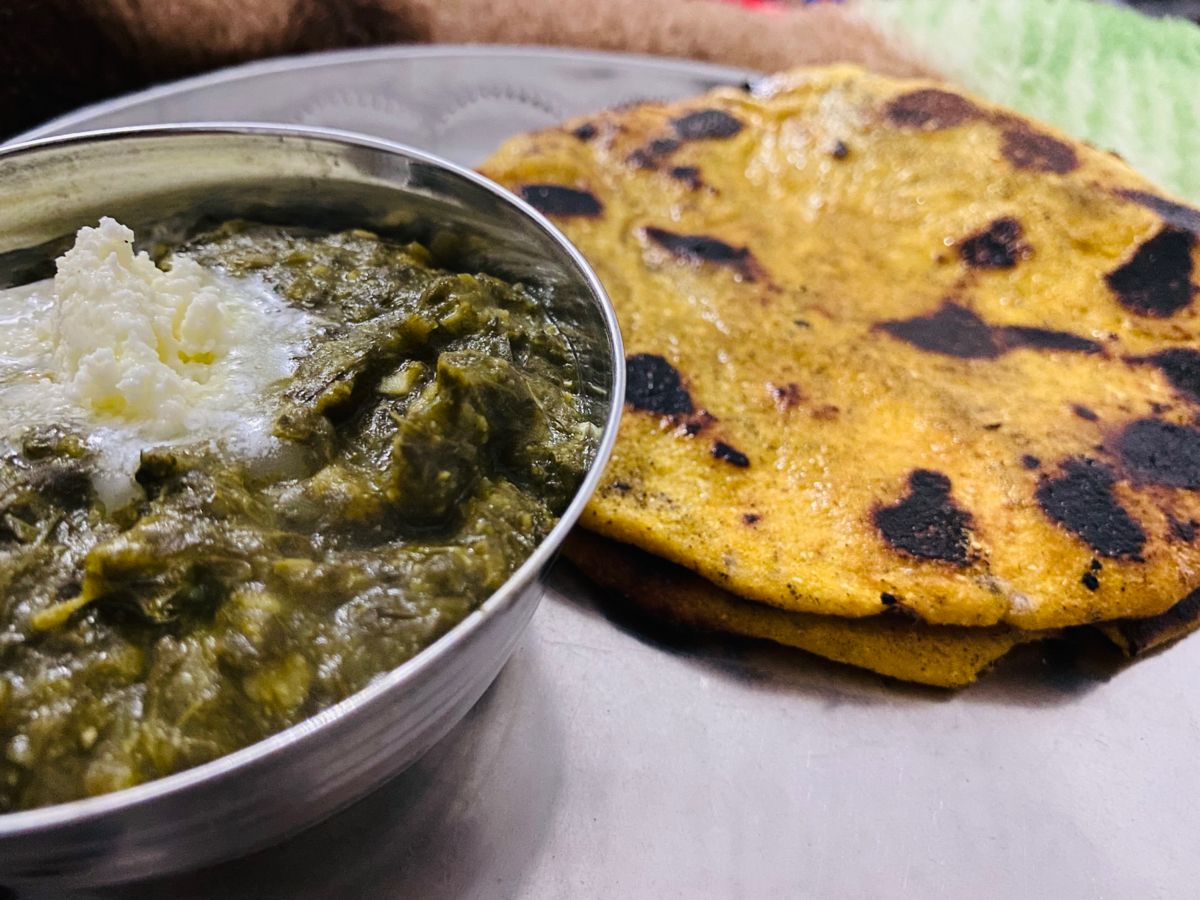
- Makki di roti and sarson da saag, the iconic winter combination of Punjab that reflects the produce of the season
Families sit together and share these meals, often on a floor mat or around a low table, turning food into an expression of love, care and tradition. The recipes are usually passed down from parents and grandparents, preparing them becomes a way of remembering those who are no longer physically present but remain alive in flavors and rituals. These dishes reflect the agricultural roots of Punjab and the deep connection between the land and the kitchen.
Two Festivals, One Spirit
Although Lohri and Maghi are celebrated on consecutive days and have different moods, they are beautifully connected at a deeper level. Looking at them together reveals how Punjabi culture sees life as a blend of joy and responsibility.
- Lohri represents joy, warmth, harvest and social bonding
- Maghi represents spirituality, remembrance, sacrifice and renewal
Lohri celebrates life with music, dance and fire; Maghi honors life with faith, gratitude and memory. The transition from one to the other is like moving from the outer circle of celebration to the inner circle of contemplation. Together, they show how Punjabi culture balances celebration with responsibility, happiness with humility and tradition with meaning, without letting any one aspect dominate completely.
Relevance in Today’s Modern World
In today’s fast-paced world of city life, deadlines and digital screens, festivals like Lohri and Maghi play an even more important role. They act as pauses in a restless routine, inviting people to slow down, look around and reconnect with what truly matters.
These festivals:
- Bring families together, away from phones and towards real conversations
- Help children learn about their roots, language and history in a natural way
- Keep alive the values of gratitude, courage and community feeling
Whether in a small village surrounded by fields or in a high-rise apartment in a big city, Punjabis across the globe continue to celebrate Lohri and Maghi with pride. Even in foreign countries, Punjabi communities organise Lohri nights and Maghi gatherings so that the next generation does not grow up knowing only the weather of their new country, but also the seasons of their original culture.
These festivals gently remind us to:
- Respect nature and the gifts it gives us
- Honors the sacrifices made by those before us
- Celebrate life with gratitude, unity and love
In a time when individualism is often glorified, Lohri and Maghi quietly re-emphasize the importance of sangat company, community and collective spirit. They show that personal happiness becomes deeper when shared and that faith becomes stronger when remembered together.
Conclusion: The Heartbeat of Punjab’s Winter
Lohri and Maghi are much more than winter festivals. They are a beautiful reflection of Punjab’s soul, warm like the Lohri fire and deep like the faith of Maghi. From the crackling flames and joyful dances of Lohri to the peaceful prayers and sacred remembrance of Maghi, these two days capture the perfect balance between joy and devotion, culture and spirituality, tradition and continuity.
As winter slowly fades and a new season begins, Lohri and Maghi inspire people to move forward with hope, strength and togetherness with hearts lit by gratitude and lives guided by faith. In that sense, these festivals are not just events on 13th and 14th January; they are living lessons on how to celebrate, how to remember and how to stay human in every season of life.